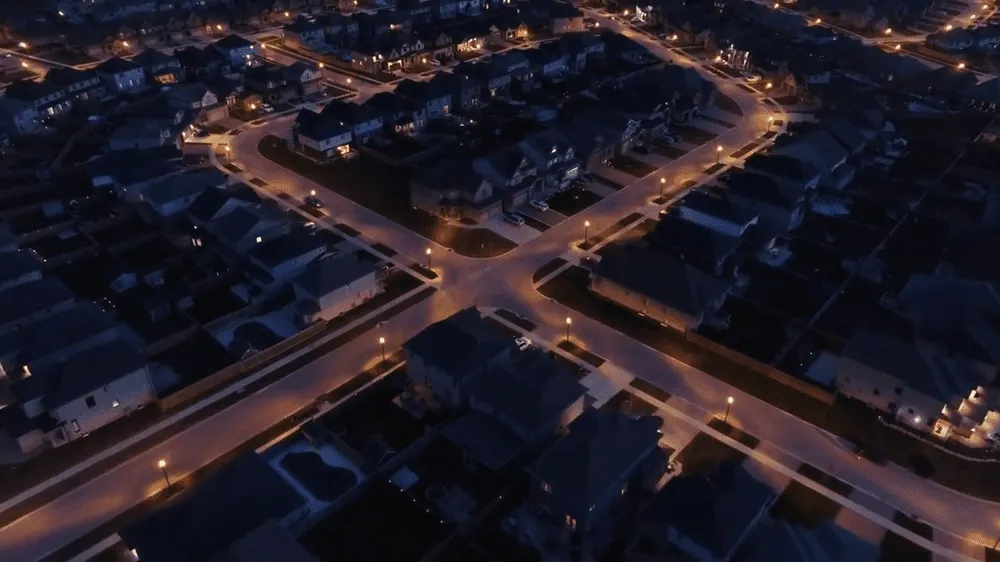

In today's digital wave, artificial intelligence (AI) is integrating into every corner of urban life at an astonishing speed. From intelligent transportation systems that optimize the traffic flow on urban roads in real time to smart security that efficiently identifies potential risks with the help of AI surveillance cameras; from intelligent medical care that assists doctors in making accurate diagnoses to smart homes that provide residents with convenient and comfortable living experiences. As the application of AI continues to expand in urban layouts, its power demand is also growing exponentially. Against this backdrop, photovoltaic energy storage, as a clean and sustainable energy solution, plays a crucial role in meeting the growing power demand of AI.
The Growing Power Consumption Trend of AI Layout in Cities
The core of AI technology lies in complex algorithms and large-scale data processing, a process that relies on powerful computing capabilities. Take data centers as an example. As a key infrastructure for AI operation, the server clusters in data centers need to run around the clock for data storage, analysis, and operation. According to statistics, the power consumption of data centers globally has increased several times in the past decade, and it is expected to continue to rise at a rate of 10%-20% per year in the future. The same is true for intelligent transportation systems in cities. A large number of traffic cameras, sensors, and edge computing devices require continuous power supply to collect and process traffic data in real time, so as to achieve the optimized control of intelligent traffic lights and the regulation of traffic flow. Moreover, with the in-depth advancement of smart city construction, more and more urban facilities will be equipped with AI functions. For example, smart streetlights can automatically adjust their brightness according to ambient light and pedestrian activities, and smart trash cans can monitor the waste capacity and notify for cleaning in a timely manner. These seemingly minor AI applications, under the large-scale urban layout, have a cumulative power consumption that cannot be underestimated.
The Power Generation Mode of the Photovoltaic Energy Storage System
Distributed Photovoltaic Power Generation Layout
In order to address the power challenges brought about by the layout of AI in cities, distributed photovoltaic power generation can be an effective solution. A large number of photovoltaic panels can be installed on the rooftops, walls, and other spaces of urban buildings. These photovoltaic panels can convert solar energy into electricity, which can be directly used by the AI devices in the buildings. For instance, installing a distributed photovoltaic power generation system on large buildings such as office buildings and shopping malls in the city can supply power to the office automation AI systems, intelligent business management systems, etc. running inside the buildings. It is estimated that for a medium-sized commercial building, if all the rooftop area is used to install photovoltaic panels, it can generate hundreds of thousands of kilowatt-hours of electricity per year, which can meet the daily power consumption needs of some AI devices in the building. This distributed power generation mode can reduce the loss during the power transmission process, improve energy utilization efficiency, and flexibly adjust the power supply according to the power consumption requirements of the AI devices in the building.
Coordination between Centralized Photovoltaic Power Plants and Urban Power Grids
Centralized photovoltaic power plants can be built in the areas surrounding the city. These large-scale photovoltaic power plants make use of vast land resources and install large-scale photovoltaic arrays, which can generate a large amount of electricity. The electricity generated by centralized photovoltaic power plants can be connected to the urban power grid and work in coordination with the grid to provide stable power support for AI devices everywhere in the city. When the power generation of the photovoltaic power plant is sufficient, the excess electricity can be stored in the energy storage facilities of the grid for use during the peak power consumption periods of AI. For example, a large-scale photovoltaic power plant built in the suburbs of the city can have a power generation capacity of several megawatts or even dozens of megawatts. The electricity is transmitted to the urban power grid through high-voltage transmission lines, and then the grid distributes the power to various areas of the city, providing power guarantees for AI-intensive application areas such as data centers and intelligent transportation hubs.
The Key Role of the Energy Storage Link in Stabilizing the Power Supply for AI
Coping with the Intermittency of Photovoltaic Power Generation
Photovoltaic power generation is affected by factors such as weather and day and night, and has obvious intermittency. When the sunlight is sufficient during the day, the photovoltaic panels can generate electricity efficiently, but at night or on cloudy days, the power generation will drop significantly or even stop. And AI devices require a continuous and stable power supply. At this time, the energy storage system plays a key role. Energy storage batteries can store the excess electricity when the photovoltaic power generation is excessive; when the photovoltaic power generation is insufficient or unable to generate electricity, they release the stored electricity to ensure the normal operation of AI devices. Taking the intelligent security monitoring system in the city as an example, this system needs to run continuously for 24 hours. The energy storage system can charge when the photovoltaic power is sufficient during the day and supply power to the monitoring cameras and the back-end AI image analysis devices at night when there is no light, ensuring the continuity of security monitoring and the effective implementation of the AI security function.
Peak Shaving and Valley Filling to Ensure Stable Power Consumption
The power consumption demand of AI in the city varies greatly at different times. For example, during the daytime on working days, the power consumption demand of AI devices in data centers and corporate office premises is high, while it is relatively low at night. The energy storage system can take advantage of the peak-valley difference in electricity prices. During the low-power-consumption periods, such as late at night, it stores the low-cost photovoltaic electricity; during the peak-power-consumption periods, it releases the stored electricity to meet the power consumption needs of AI devices, thus reducing the power consumption cost. At the same time, through this method of peak shaving and valley filling, it can relieve the power supply pressure of the urban power grid during peak power consumption periods and ensure the stability of AI power consumption. For example, large data centers can be equipped with energy storage systems. They store photovoltaic electricity when the electricity price is low at night and use the energy storage system to supply power during the peak power consumption period in the daytime, reducing the dependence on the power grid during peak periods. This not only reduces the operating cost of the data center but also improves the reliability of power supply.
Photovoltaic Energy Storage Provides Long-term Power Guarantee for the Expansion of AI Layout
As the layout of AI in cities continues to expand, higher requirements are put forward for the long-term and stable power supply. The photovoltaic energy storage system, due to its renewable and sustainable characteristics, can provide a solid energy backup for the development of AI. On the one hand, solar energy, as a clean energy source that is inexhaustible and renewable, as long as there is sunlight, the photovoltaic panels can continuously generate electricity, which provides a stable energy source for the long-term power consumption needs of AI. On the other hand, with the continuous progress of energy storage technology, such as the research and development and application of new battery materials, the energy storage capacity and charging and discharging efficiency of the energy storage system are constantly improving, and the cost is gradually decreasing, which can better meet the large-scale power consumption needs of AI. In the long run, the combination of the photovoltaic energy storage system and AI can not only solve the current power consumption problems of AI in urban layouts but also provide reliable power guarantees for the in-depth development of smart cities in the future and the implementation of more innovative AI applications, helping cities move towards a more intelligent and green direction.