Solar Road Lighting Specs
-- Class First, Fixture Second
Solar Road Lighting Specs
-- Class First, Fixture Second
A solar street light is an off-grid project: the battery stores every lumen before the lamp spends it, so the design starts at the road's lighting class and the site's worst solar month. The fixture comes last. This page maps road class to mounting height and spacing, explains the optics choices, runs the arithmetic behind "5+ days autonomy," and states what the 180 km/h wind figure does and does not tell you.
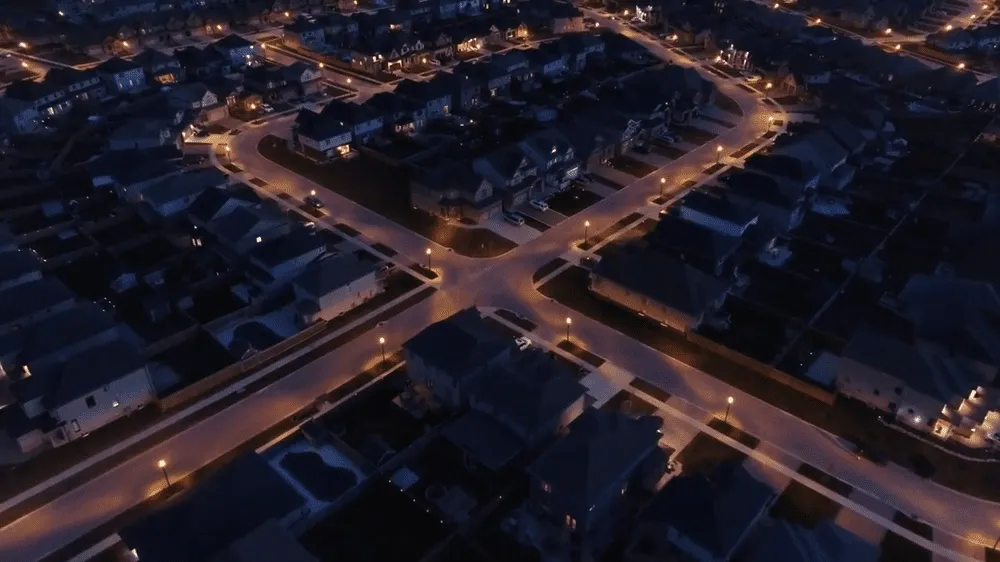
The mapping the spec uses is standard engineering: 8–10 m mounting for local roads, 10–12 m for collectors, 12–15 m for arterials, with 25–35 m spacing. The rule behind those numbers: spacing sits at roughly 2.5–3.5 times mounting height, and height follows the road width the light has to cover. Intersections are the exception that specs forget — extending a uniform run into an intersection leaves the conflict point, where traffic actually crosses, in the darkest part of the layout. Spec intersections separately: different mounting, different aiming, sometimes a different fixture.
The 15–20 lux average-maintained figure belongs to higher-class urban arterials. Local streets run lower (single-digit lux is typical), and picking the wrong class wastes energy or under-lights the road. Uniformity matters as much as the average: the spec's 0.4 minimum ratio (average-to-minimum) is a sound floor for main roads, because drivers read the road from its darkest patch, not its average. On the glare rating ("G4 or better"), confirm which scale the spec references before it goes into a contract — the G-rating scale and EN 13201's threshold increment are different instruments, and a rating quoted against the wrong one is unenforceable.
Type II distribution suits standard roads; Type III spreads wider for broader streets. Asymmetric patterns throw light down the roadway instead of into the windows beside it, and on residential streets that single choice decides whether the project survives its first complaint. Cut-off optics keep light out of drivers' eyes, which is a safety requirement rather than an aesthetic one. Dark-sky compliance goes into the spec as a BUG rating (backlight, uplight, glare) — the metric that makes "dark sky compliant" checkable instead of a slogan.
Color temperature: 4000K standard for urban streets, 5000K for major arterials, with CRI (color rendering index) above 70 for object recognition — above 80 where vehicle or facial identification matters. Consistent color uniformity across installations keeps one street from looking like three different projects.
Panels at 400–600 W, LiFePO4 storage at 1800–3000 Wh, "5+ days autonomy" — here is what that claim requires. A 3,000 Wh battery at roughly 85% usable capacity gives about 2,550 Wh. At a 60 W average nightly draw over 11 hours (660 Wh per night), that is about 3.8 nights. Five-plus days holds when the dimming schedule keeps the average under roughly 50 W. Autonomy claims are only as good as the dimming schedule behind them, so ask for the schedule, not the headline. Temperature-compensated charging and a smart battery management system are what keep the battery alive through the seasons that produce the claim.
A 400–600 W panel on a 24 V bank puts Vmp well above battery voltage, which is MPPT territory under the voltage-ratio rule in our MPPT vs PWM guide. The controller sizing calculator runs the numbers for your load and autonomy target.
A 180 km/h design wind speed (roughly 50 m/s) is a high-end target, and it is only meaningful against the assembly it was calculated for. Wind load comes from the effective projected area (EPA): the panel is often the governing surface rather than the pole, and a taller pole multiplies the base moment even at the same wind speed. Verify the figure against your local code (ASCE 7 in the US, EN 1991-1-4 or ISO 4354 elsewhere), with the 1.5 minimum safety factor, vibration dampening, and hot-dip galvanized construction the spec calls for. Our wind load calculator runs the complete assembly of pole, arm, fixture, and panel for your site.
Motion-based adaptive dimming, remote monitoring and management, automatic fault detection, emergency response integration, traffic-flow-based adjustment, and energy optimization make up the standard control list, and the dimming is the load-bearing item. One correction to the marketing: "zero electricity costs" is true about energy, not about cost. Panel cleaning, battery replacement at 5–8 years depending on climate, and an annual connection check are real line items, and a spec that omits them is a budget waiting to be surprised.
This page is a design specification, not a case study — no measured project data yet. When the next completed road project clears its warranty period, this page gains location, road class, pole count and heights, fixture wattage, measured illuminance, and photographs. The lighting design tool sets the class and layout for a specific road; our all-in-one solar street light line is the hardware the spec describes.
This page covers roads and streets from local to arterial class. Parking facilities follow a different coverage model (see the parking lot page), and parks organize by zone rather than by class.