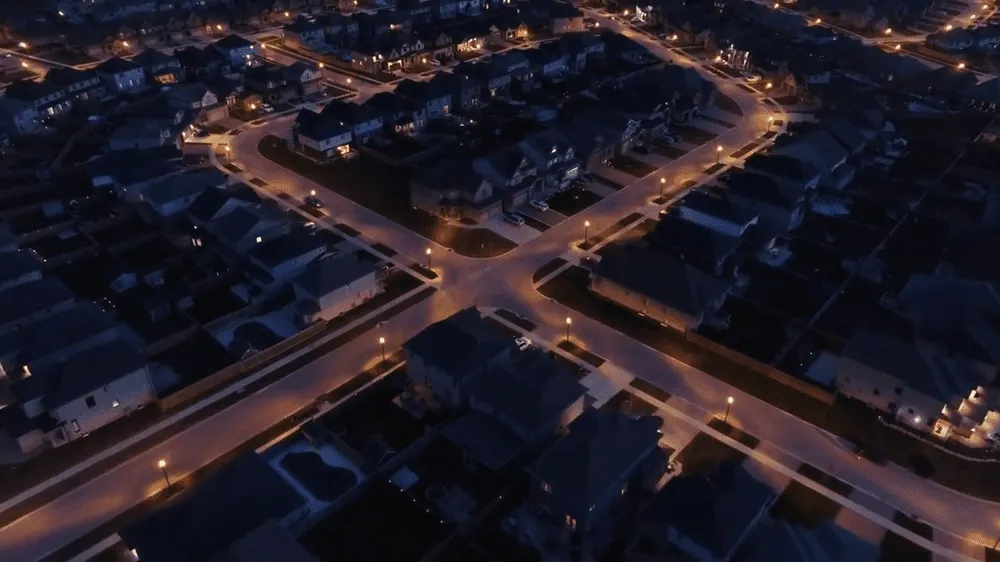
Solar Panel Street Lights: Commercial Solar Panel Technologies
Monocrystalline panels offer highest efficiency (>20%) and space efficiency but at higher cost. Polycrystalline panels provide good balance of cost and performance (15-17% efficiency). Thin-film panels are lightweight and flexible but require more space due to lower efficiency (10-12%).
Optimal panel orientation depends on latitude, local weather patterns, and site-specific shading analysis. Tilt angles typically match latitude for best year-round performance.
1. Monocrystalline Solar Panel Street Lights
Monocrystalline solar panel street lights are made from a single crystal structure of silicon, making them highly efficient and space-efficient. The manufacturing process involves slicing thin wafers from a single crystal of silicon, which results in a uniform and pure silicon structure for any solar lighting system.
a. Characteristics and Efficiency
Monocrystalline panels typically have a higher efficiency rate compared to other types of solar panels, often exceeding 20%. This high efficiency means that they can generate more electricity from a smaller area, making them ideal for commercial solar street lights or spaces with limited installation space. The uniform black appearance of monocrystalline panels is aesthetically pleasing and can enhance the overall look of a project.
b. Advantages
- Space Efficiency: Higher efficiency allows for more electricity generation in less space.
- Longevity: Monocrystalline panels have a longer lifespan, often backed by warranties of 25 years or more.
- Performance in Low Light: They perform better in low-light conditions compared to other panel types.
c. Limitations
- Cost: The manufacturing process for monocrystalline panels is more energy-intensive, leading to higher costs compared to other panel types.
- Temperature Sensitivity: While they perform well in low-light conditions, high temperatures can reduce their efficiency.
2. Polycrystalline Solar Panel for Parking Lot Lights
Polycrystalline solar panels are made from multiple silicon crystals melted together to form a single silicon ingot, which is then sliced into wafers. This manufacturing process results in a less pure silicon structure, which is often used in solar panel street light pole configurations due to its cost-effectiveness.
a. Characteristics and Efficiency
Polycrystalline panels generally have a slightly lower efficiency than monocrystalline panels, typically ranging from 15% to 20%. While they occupy more space for the same amount of electricity generation, they are still an effective option for many solar powered street lights applications.
b. Advantages
- Cost-Effectiveness: Polycrystalline panels are generally cheaper to produce, making them a more budget-friendly option for consumers.
- Less Energy-Intensive Manufacturing: The production process for polycrystalline panels is less energy-intensive, leading to a smaller carbon footprint in their manufacturing.
c. Limitations
- Lower Efficiency: Their lower efficiency means they require more space to generate the same amount of energy as monocrystalline panels.
- Less Aesthetic Appeal: The bluish, speckled appearance of polycrystalline panels may be less appealing to some consumers.
3. Thin-Film Solar Panel to Power Outdoor Lights
Thin-film solar panels are made by depositing one or more thin layers of photovoltaic material onto a substrate. These panels are a unique solar panel kit for outdoor lighting alternative for specialized architectural projects.
a. Characteristics and Efficiency
Thin-film panels are generally less efficient than both monocrystalline and polycrystalline panels, with efficiency rates typically between 10% and 13%. However, they are lightweight and flexible, making them suitable for a variety of commercial solar street lights applications, including integration into building materials.
b. Advantages
- Lightweight and Flexible: Thin-film panels can be installed on surfaces that cannot support the weight of traditional solar panels.
- Performance in High Temperatures: They perform better than crystalline panels in high-temperature conditions, making them suitable for hot climates.
- Lower Production Costs: The manufacturing process is generally less expensive, contributing to lower retail prices.
c. Limitations
- Lower Efficiency and Space Requirements: Due to their lower efficiency, thin-film panels require significantly more space to produce the same amount of energy as crystalline panels.
- Shorter Lifespan: They typically have a shorter lifespan and lower warranty periods compared to crystalline solar panels.
4. TopCon Technology for Commercial Solar Street Lights
TopCon, or Tunnel Oxide Passivated Contact, is a recent innovation in solar panel street lights technology that enhances the efficiency of crystalline silicon solar cells. By adding a thin layer of tunnel oxide on top of the silicon wafer, this technology improves light absorption and reduces electron recombination, resulting in higher efficiency rates for your solar lighting system.
a. Advantages of TopCon Technology
- Increased Efficiency: TopCon solar cells can achieve efficiencies of over 24%, making them competitive with the latest solar technologies.
- Improved Performance: These cells show improved performance in various environmental conditions, maintaining efficiency in high temperatures and low-light conditions.
- Potential for Lower Costs: As production methods evolve, TopCon technology has the potential to offer high efficiency at a lower cost compared to traditional solar cells.
5. Conclusion
Choosing the right type of solar panel street lights is crucial for optimizing energy generation and consumption in residential and commercial applications. Monocrystalline panels offer high efficiency and space savings, making them ideal for commercial solar street lights with limited roof space, while polycrystalline panels provide a cost-effective solution for larger installations. Thin-film panels offer flexibility and lightweight options, while advancements like TopCon technology promise to enhance efficiency and performance in the future.
As solar technology continues to evolve, understanding the characteristics, advantages, and limitations of each type of solar panel to power outdoor lights will empower consumers to make informed decisions about their renewable energy investments. Ultimately, the adoption of solar powered street lights not only contributes to a more sustainable future but also helps reduce energy costs and dependence on fossil fuels.