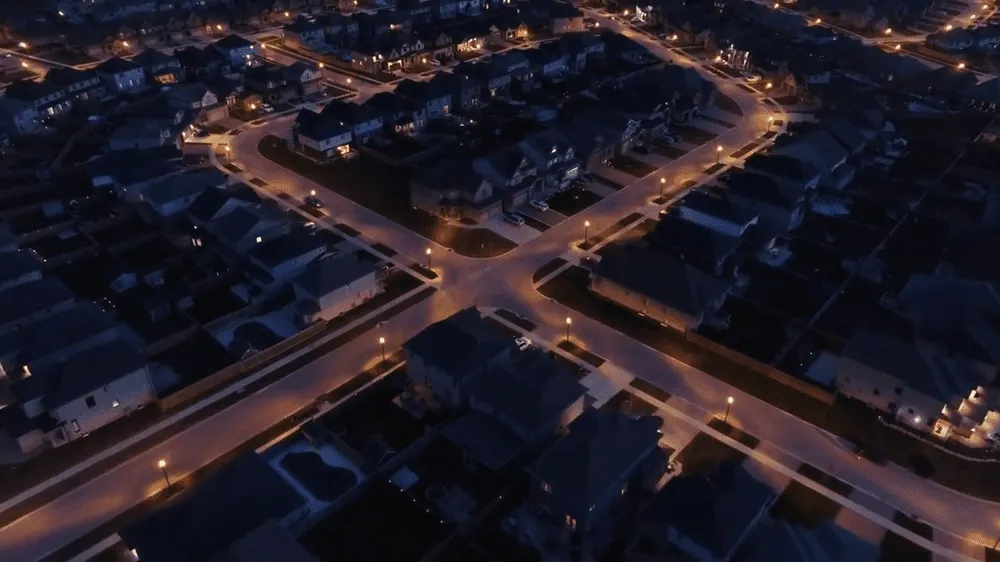
Commercial Solar Lighting Simulation: Design Guide for Solar Street Lights

How Lighting Simulation Empowers a Solar Lighting System Design
Against the backdrop of the global advocacy for green energy, solar powered street lights have emerged as a new choice for urban and rural lighting. However, creating an efficient and aesthetically pleasing off grid lighting system is no easy feat. Conducting professional lighting simulations before choosing a solar street light manufacturer and customizing specific parameters, such as solar street light specification and solar panel for outdoor lighting, is of paramount importance.
Energy Efficiency for Solar Street Lights: Minimizing Waste
PV lamp post systems rely on the conversion of solar energy into electricity for illumination. The uniqueness of their energy supply dictates the need for meticulous energy consumption management. Professional lighting simulation software, by creating 3D virtual scenarios, can accurately simulate the lighting effects of different lamp post heights, lamp head installation angles, and lighting fixture types in specific road environments.
Take lamp post height as an example. A taller lamp post may expand the lighting range, but it requires higher-power lamps to meet road illumination requirements, thereby increasing the power generation load on PV panels and the capacity demand of energy storage devices. Conversely, a shorter lamp post may lead to overlapping illumination, causing energy waste. Through simulations, the most suitable lamp post height can be scientifically calculated based on actual road width, surrounding buildings, and other parameters, ensuring that energy consumption is minimized while meeting lighting needs.
Moreover, different lamp head heights and angles affect the projection range and uniformity of light. In the simulated environment, designers can visually observe the light distribution, avoiding lighting blind spots or over-illuminated areas. For instance, in road lighting scenarios, adjusting the lamp head angle properly can concentrate light on the driving lanes and sidewalks, reducing unnecessary illumination of surrounding areas. This, in turn, lowers the operating power of the lamps and indirectly reduces the overall energy consumption of the PV system. Additionally, simulations can integrate data on local sunshine duration and climate conditions to optimize the installation angle and area of PV panels, ensuring efficient solar energy collection and utilization and further enhancing the system's energy efficiency.
Solar Lighting Aesthetics: Design for Commercial Applications
PV lamp posts not only serve the function of illumination but also play a significant role in urban landscapes and rural sceneries. Their aesthetic appeal directly impacts people's visual experience and the environmental atmosphere. Professional lighting simulations provide powerful design tools and visualization platforms for creating aesthetically pleasing PV lamp post systems.
Whether it's the combination of lamp post and lamp head heights or the selection of lamp head shapes and light colors, simulation software can demonstrate how different design combinations blend with the surrounding environment. In urban squares or commercial districts, simulations help determine the appropriate lamp post height, ensuring that the lighting is sufficient while harmonizing with surrounding architectural structures, sculptures, greenery, and other landscape elements. In historic and cultural areas, warm-toned lighting paired with retro-style lamp heads can create a cozy and elegant atmosphere. In modern science and technology parks, cool-toned lighting with sleek, minimalist lamp heads better conveys a sense of technology and modernity.
Furthermore, simulating lighting changes at different times of the day enables designers to control the visual effects of the lighting during day-night transitions, preventing overly bright lights from disrupting the beauty of the night sky. This ensures that the final PV lamp post system not only meets lighting requirements but also becomes a beautiful highlight in the environment.
Conclusion
In conclusion, conducting professional lighting simulations before customizing the best solar powered street lights is a crucial step in achieving energy optimization and aesthetic design. Like a guiding light, it steers the design and implementation of commercial solar street lights, ensuring that each system provides a comfortable and aesthetically pleasing lighting experience while upholding energy conservation principles. This, in turn, propels the PV lighting industry towards higher quality and more sustainable development.