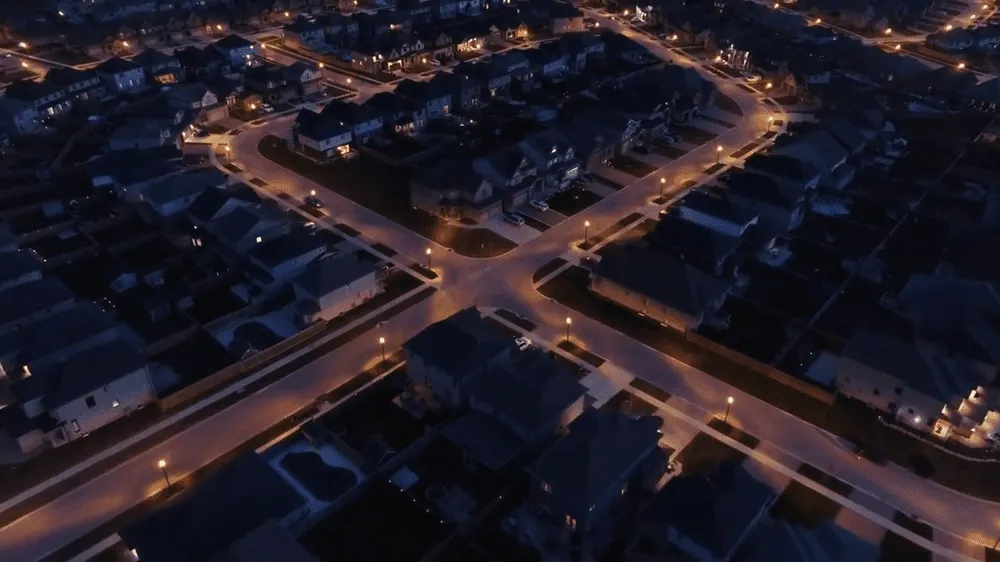
Solar Powered Outdoor Lights: Lens and Specification Guide
Lens design for solar powered outdoor lights significantly impacts distribution patterns. In any solar street light specification, Type I-V distributions suit different applications. Prismatic lenses control spread and reduce glare for commercial solar street lights. Fresnel lenses focus light efficiently while maintaining thin profiles, a key feature in modern solar parking lot pole lights.
Light Distribution Patterns for Solar Powered Outdoor Lights
Light distribution in solar powered outdoor lights refers to how light from a fixture spreads across an area. It is influenced by the solar street light specification, including the type of light source and the lens. A well-designed pattern ensures that commercial solar street lights illuminate evenly. Poor distribution can lead to inefficiencies in solar parking lot lights, wasted energy, and light pollution. The primary function of a lens is to manipulate light to achieve a desired pattern, which is a critical part of the solar street light specification for any professional project.
Lens Types for Solar Parking Lot Pole Lights
There are several types of lenses used in solar powered outdoor lights, each affecting the solar street light specification in unique ways:
- Convex Lenses: Convex lenses are designed to focus light and create a more concentrated beam for best solar powered street lights performance. These lenses take light that is emitted in multiple directions and direct it toward a single point, creating a focused, narrow beam. This is useful in applications where spotlighting is required, such as in display lighting, accent lighting, or roadway illumination where light needs to be concentrated in a specific area.
- Concave Lenses: In contrast to convex lenses, concave lenses spread light over a wider area, making them ideal for solar parking lot lights. These lenses diverge light, allowing for a broader distribution. This makes them perfect for general lighting applications where a wide, even spread of light is needed, such as in large indoor spaces, parking lots, or open areas.
- Fresnel Lenses: Fresnel lenses are designed to focus light similarly to a convex lens but with a much thinner, more compact profile, perfect for compact commercial solar street lights. These lenses use a series of concentric rings to focus light, making them ideal for applications that require a lightweight, efficient lens capable of creating a narrow beam with minimal light loss.
- Diffuser Lenses: Diffuser lenses scatter light, softening its distribution and creating a more uniform spread in solar powered outdoor lights. These lenses are ideal for applications where harsh light or direct glare would be uncomfortable, such as in office environments, homes, or retail spaces.
- Prismatic Lenses: Prismatic lenses use a pattern of prisms on their surface to break up and distribute light more evenly, a common solar street light specification for hallways and streets. These lenses can be designed to spread light in specific patterns, such as rectangular or circular distributions, making them ideal for environments that require tailored light coverage, such as hallways, solar streets, or warehouse aisles.
How Lenses Shape Light for Commercial Solar Street Lights
The shape of a lens directly affects how solar powered outdoor lights perform. For example, a clear lens will focus light into a narrow beam, while a frosted lens will spread it over a larger area for solar parking lot pole lights. By changing the distribution, lenses can:
- Focus Light: Essential for best solar powered street lights to reach far distances.
- Diffuse Light: Creates soft, even lighting for solar powered outdoor lights.
- Control Light Leakage: Enhances the efficiency of commercial solar street lights by preventing spill.
Applications of Lenses in Solar Street Light Specification
Different environments require varying patterns, and the correct lens is crucial for optimizing the solar street light specification.
- Street Lighting: Lenses in commercial solar street lights focus light downward to minimize spill.
- Commercial Spaces: Lenses provide even illumination for solar parking lot pole lights, reducing fixture count.
- Architectural Lighting: Focused beams for solar powered outdoor lights highlight features.
- Indoor Spaces: Comfort is key, so lenses that diffuse light and reduce glare are preferred for optimal user experience.
The Role of Lens Materials
In addition to shape, the material of a lens also affects light distribution. Common materials include glass, acrylic, and polycarbonate. Each has different properties regarding light transmission, durability, and heat resistance. For instance:
- Glass offers excellent clarity and transmits a high percentage of light but is heavier and more fragile.
- Acrylic is lightweight, durable, and transmits light well, making it a popular choice for most applications.
- Polycarbonate is highly impact-resistant and can withstand harsh conditions, making it suitable for outdoor or solar-powered industrial lighting environments.
Conclusion
Lenses are a critical component in solar powered outdoor lights, influencing how light is distributed. By shaping the beam, these lenses allow for tailored solutions that meet the solar street light specification of different applications—whether it be focused commercial solar street lights or wide-spread solar parking lot lights. Through proper lens selection, systems can enhance efficiency and comfort while minimizing pollution. As technology evolves, lenses will remain central to designing effective best solar powered street lights.