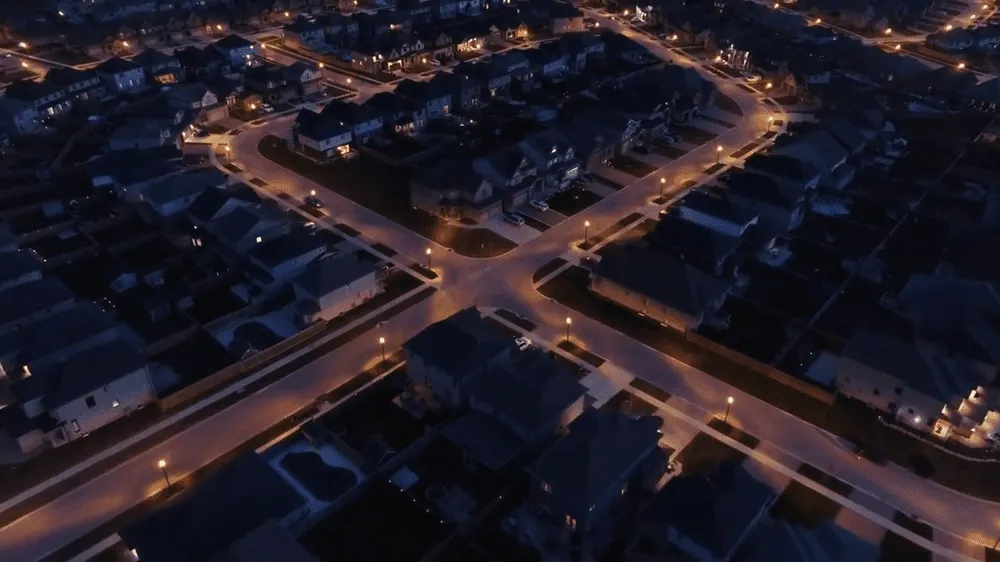
How Do HPS & LED Streetlights Compare

Streetlighting is vital for nighttime infrastructure, impacting safety and quality of life. The technology for solar powered street lights has evolved from traditional High-Pressure Sodium (HPS) to modern solar led street lighting systems. Understanding the differences is key to selecting the best solution for your needs, especially for an off grid lighting system.
Disadvantages of Traditional Streetlights (HPS) vs Solar LED Street Lighting System
Traditional streetlights, particularly HPS, face several limitations that make them less suitable compared to modern LED alternatives used in the best solar powered street lights.
Limited Light-Source Characteristics
Traditional streetlights such as HPS have significant limitations in their light production:
- Rely on sodium-vapor discharge, which produces substantial infrared radiation and leads to significant energy loss.
- Require long startup and restrike times.
- Luminous efficacy typically ranges from a relatively low 50–100 lm/W, and ballasts further reduce the proportion of electrical energy converted into visible light.
- HPS lamps generally feature a color rendering index (CRI) of only 20–40, causing serious color distortion and hindering visual recognition.
High Energy Consumption and Short Lifespan
HPS and other traditional streetlights are inefficient and have limited durability:
- Consume 30%–50% more energy than LED streetlights because of low intrinsic luminous efficiency and additional power loss from ballasts and related components.
- Lamp lifespan is limited to roughly 10,000–20,000 hours.
- Filaments and electrodes prone to aging, and ballasts experiencing frequent failures.
Cost and Maintenance Challenges
HPS and traditional streetlights present significant cost and maintenance issues:
- Although individual components of HPS streetlights may not be expensive, the combined cost of lamps, ballasts, and transformers results in a considerable initial investment.
- Due to their short lifespan and high failure rate, frequent lamp replacement and equipment repairs are necessary.
- These tasks require trained technicians, causing maintenance costs to remain high.
Advantages of LED in Solar Powered Commercial Lights
LED streetlights offer numerous benefits that make them the superior choice for modern lighting applications, especially when paired with a solar panel for outdoor lighting.
Superior Light-Source Performance
LED streetlights provide exceptional light-source characteristics:
- Emit light through electron–hole recombination in a semiconductor PN junction, converting electrical energy into light with high efficiency and minimal loss.
- Luminous efficacy can reach 100–200 lm/W, and optimized optical design further enhances light utilization.
- With a CRI of 70–90 or higher, LEDs accurately render object colors and significantly improve visual clarity.
Energy Savings and Long Lifespan
LED streetlights are highly energy-efficient and durable:
- Consume only 50%–70% of the energy required by traditional HPS streetlights.
- Intelligent dimming can further enhance energy savings.
- Theoretical lifespan ranges from 50,000 to 100,000 hours, with real-world performance typically exceeding 30,000–50,000 hours.
- Solid-state structure reduces the likelihood of component failure.
Cost and Maintenance Advantages
LED streetlights offer significant cost benefits over time:
- Over long-term operation, the energy efficiency and extended lifespan offset their higher initial purchase cost.
- Simple structure and low failure rate benefit from smart monitoring systems that identify potential issues in advance.
- Routine maintenance is minimal and generally limited to cleaning and basic inspections.
Conclusion: The Shift to Solar Powered Street Lights
HPS and other traditional streetlights show notable disadvantages, while LED streetlights offer clear and significant advantages. As technology continues to advance and costs decrease, the widespread adoption of LED streetlighting, particularly in the form of commercial solar street lights, is becoming inevitable, supporting the sustainable development of urban and rural illumination. For more solar street light information, consult with industry experts.