Tecnologia de Lentes para Sistemas de Lâmpadas Solares Comerciais de Rua
O design da lente impacta significativamente os padrões de distribuição de luz. As distribuições de Tipo I-V são adequadas para diferentes aplicações. Lentes prismáticas controlam a propagação da luz e reduzem o brilho excessivo. Lentes de Fresnel concentram a luz de forma eficiente mantendo perfis finos. A escolha do material (vidro, acrílico, policarbonato) afeta a transmissão de luz e a durabilidade.
Padrões de Distribuição de Luz para Lâmpadas Solares Exteriores
Light distribution refers to how light from a fixture spreads across an area. It is influenced by several factors, including the type of light source, the luminaire's design, and the lens. A well-designed light distribution ensures that an area is illuminated evenly, reducing glare, shadows, and over-illumination. In contrast, poor light distribution can lead to inefficiencies, wasted energy, and undesirable lighting effects such as light pollution or discomfort to users. The primary function of a luminaire lens is to manipulate light emitted from the source to achieve a desired distribution pattern. The lens can either focus light, diffuse it, or direct it toward specific areas, depending on its design. By altering the characteristics of the light emitted, lenses allow lighting designers to tailor illumination patterns to the specific needs of a space or environment.
Tipos de Lentes para Postes de Lâmpadas Solares de Estacionamento
There are several types of lenses used in luminaires, each of which affects light distribution in unique ways. Below are some common types:
- Convex Lenses: Convex lenses are designed to focus light and create a more concentrated beam. These lenses take light that is emitted in multiple directions and direct it toward a single point, creating a focused, narrow beam. This is useful in applications where spotlighting is required, such as in display lighting, accent lighting, or roadway illumination where light needs to be concentrated in a specific area.
- Concave Lenses: In contrast to convex lenses, concave lenses spread light over a wider area. These lenses diverge light, allowing for a broader distribution. This makes them ideal for general lighting applications where a wide, even spread of light is needed, such as in large indoor spaces, parking lots, or open areas.
- Fresnel Lenses: Fresnel lenses are designed to focus light similarly to a convex lens but with a much thinner, more compact profile. These lenses use a series of concentric rings to focus light, making them ideal for applications that require a lightweight, efficient lens capable of creating a narrow beam with minimal light loss.
- Diffuser Lenses: Diffuser lenses scatter light, softening its distribution and creating a more uniform spread. These lenses are ideal for applications where harsh light or direct glare would be uncomfortable, such as in office environments, homes, or retail spaces.
- Prismatic Lenses: Prismatic lenses use a pattern of prisms on their surface to break up and distribute light more evenly. These lenses can be designed to spread light in specific patterns, such as rectangular or circular distributions, making them ideal for environments that require tailored light coverage, such as hallways, solar streets, or warehouse aisles.
Como as Lentes Moldam a Distribuição de Luz
The shape and material of a lens directly affect how light is distributed in a space. For example, a clear, convex lens will focus light into a strong, narrow beam, while a frosted, concave lens will spread light over a larger area. These physical properties allow lighting designers to manipulate the characteristics of light to suit different applications. By changing the distribution pattern, luminaire lenses can:
- Focus Light: Narrow lenses, such as those found in solar streetlights or floodlights, concentrate light to ensure it reaches far distances or highlights specific areas.
- Diffuse Light: Diffuser lenses, on the other hand, spread light over wide areas, creating soft, even lighting that reduces glare and shadows, common in ambient lighting.
- Control Light Leakage: Properly designed lenses prevent light from spilling into unwanted areas, such as the sky (leading to light pollution) or neighboring properties, enhancing the efficiency of solar lighting systems.
Aplicações de Lentes de Luminares
Different environments and applications require varying light distribution patterns, and the selection of the correct luminaire lens is crucial for optimizing lighting performance.
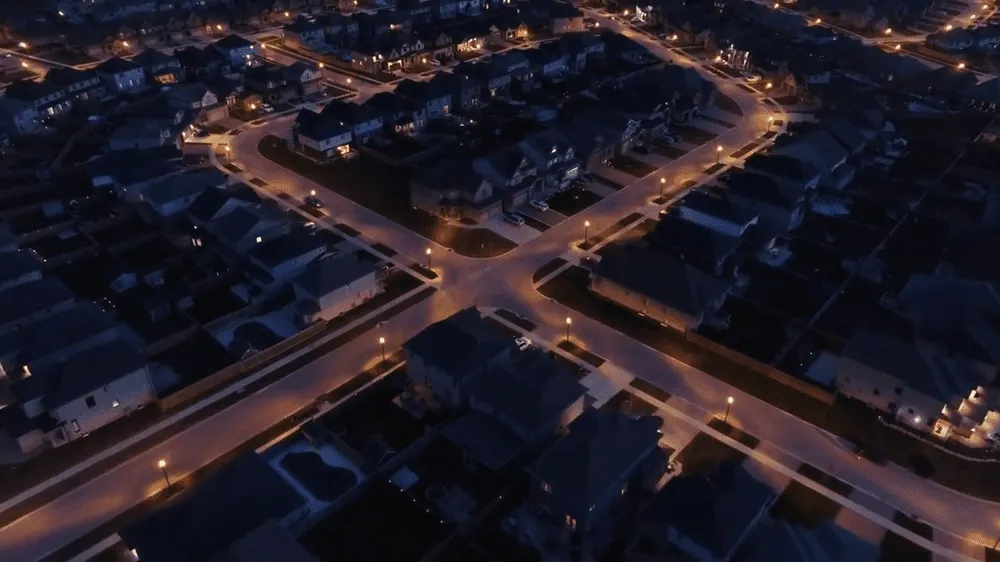
- Street and Roadway Lighting: In outdoor and roadway lighting, lenses are often designed to focus light downward in a controlled pattern that minimizes light spill and prevents light from emitting above the horizon. This ensures that light is directed only where it is needed, enhancing road visibility while reducing light pollution and energy waste.
- Industrial and Commercial Spaces: For large industrial or commercial spaces, lenses must be designed to provide even illumination over large areas, reducing the number of fixtures needed and avoiding dark spots or over-illuminated areas. Prismatic lenses, in particular, are often used in these settings to control light spread efficiently.
- Architectural and Accent Lighting: Architectural lighting often requires focused beams to highlight specific building features or create dynamic lighting effects. Convex or Fresnel lenses are ideal in such scenarios for their ability to concentrate light into sharp, defined beams.
- Indoor Spaces: In offices, homes, and retail spaces, comfort is key, so lenses that diffuse light and reduce glare are preferred. Diffuser or prismatic lenses are commonly used to ensure that the light is soft, even, and pleasant for occupants.
O Papel dos Materiais das Lentes
In addition to shape, the material of a lens also affects light distribution. Common materials include glass, acrylic, and polycarbonate. Each has different properties regarding light transmission, durability, and heat resistance. For instance:
- Glass offers excellent clarity and transmits a high percentage of light but is heavier and more fragile.
- Acrylic is lightweight, durable, and transmits light well, making it a popular choice for most applications.
- Polycarbonate is highly impact-resistant and can withstand harsh conditions, making it suitable for outdoor or solar-powered industrial lighting environments.
Conclusão
Luminaire lenses are a critical component in lighting design, significantly influencing how light is distributed in any environment. By shaping the beam, intensity, and spread of light, these lenses allow for tailored lighting solutions that meet the specific needs of different applications—whether it be focused solar street lighting, wide-spread industrial illumination, or soft, diffused indoor lighting. Through proper lens selection, solar lighting systems can enhance functionality, energy efficiency, and user comfort while minimizing light pollution and glare. As lighting technology continues to evolve, the role of lenses in optimizing light distribution will remain a central aspect of designing effective and sustainable solar lighting solutions.