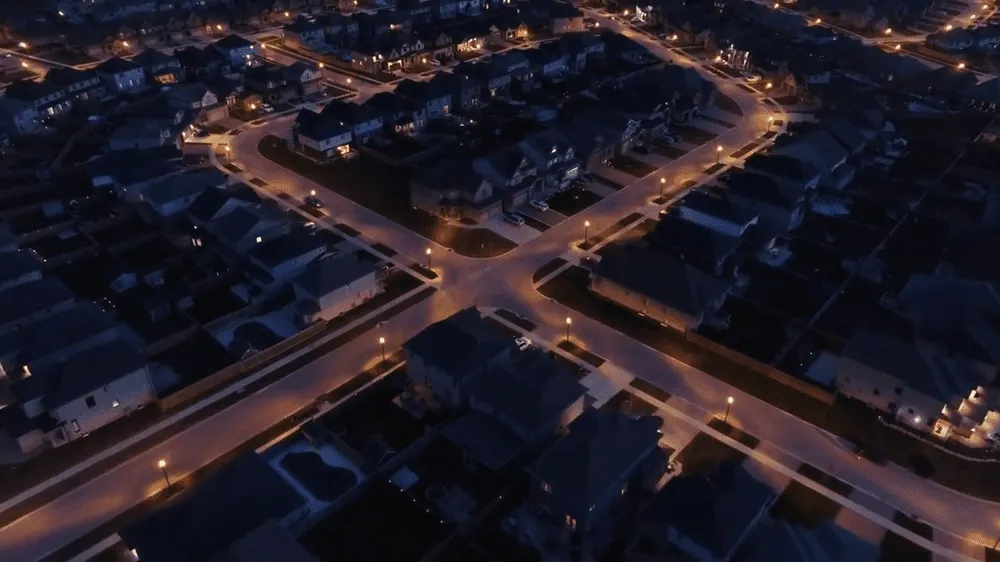
Is Mounting Solar Lights On A Fence A Particularly Bad Application Scenario
- The effectiveness of solar fence lights will be affected by the installation location, sunlight conditions and maintenance. Through reasonable selection and maintenance, the service life and performance of the product can be improved.
- Solutions:
- 1. Before installation, carefully evaluate the sunshine conditions at various times of the day and choose the best installation location.
- 2. Prioritize the sunniest pillars to install solar lights
- 3. Consider hybrid lighting solutions that combine solar and other power sources
- 4. Check the charging effect regularly and adjust the installation position or maintenance method in time.
- The panel size of solar fence lights is usually limited by the design of the post cap. In order to maintain the appearance, the battery panel area of some products may be smaller, which affects the charging efficiency.
- Solutions:
- 1. Choose products with a larger proportion of panel area to column cap to improve charging efficiency
- 2. Choose products with adjustable angles to optimize sunlight reception
- 3. Consider independent panel design and install the panel in a more suitable location
- 4. Adjust the installation position according to actual lighting conditions to maximize sunlight reception.
- It is true that the batteries of solar fence post lights may face faster wear and tear. This is mainly due to the fact that the column cap position is usually exposed to more direct sunlight, which causes the temperature to rise and accelerates battery degradation.
- Solutions:
- 1. Add a heat insulation layer between the column cap and the lamp body to reduce temperature transfer
- 2. Choose a battery type with better high temperature resistance
- 3. Regularly check the battery status and detect performance degradation in time
- 4. Choose a product design with good heat dissipation, such as a metal shell or heat dissipation holes.
- The effectiveness of solar fence post lights will be affected by many factors, including sunlight conditions, product quality and maintenance. Through reasonable selection and use, satisfactory results can be obtained.
- Solutions:
- 1. For scenes with higher lighting requirements, consider switching to low-voltage LED column cap lights.
- 2. If you pursue solar solutions, you can choose higher power products or accept them as decorative lighting
- 3. Use a variety of lighting combinations to choose the appropriate solution according to different needs.
- 4. Adjust expectations according to actual needs and plan the lighting plan reasonably.
- Failure of solar fence lights will indeed affect the overall aesthetics. A light that is not working has the potential to ruin the overall visual effect of the fence.
- Solutions:
- 1. Once the lamp is found to be faulty, repair or replace it in time
- 2. For lamps that have failed for a long time, consider replacing them with low-voltage wired lighting.
- 3. Develop a regular inspection plan to discover and solve problems in a timely manner
- 4. Consider a combination of lighting options to ensure a consistent overall effect.
- There are many options to choose from when it comes to fence post lighting. Solar solutions and low-voltage LED solutions each have their own characteristics, and the most suitable solution can be selected based on actual needs and conditions.
- Solutions:
- 1. Customize or purchase prefabricated low-voltage LED column caps to ensure stability and reliability
- 2. Connect to an outdoor transformer to provide stable power
- 3. Choose professional installation services to ensure construction quality
- 4. Evaluate long-term operating costs, including electricity and maintenance costs.
- Solar fence lights may indeed face the problem of inconsistent lighting in actual use. Due to differences in sunlight conditions in different locations, some lamps may be insufficiently charged, affecting the overall effect.
- Solutions:
- 1. Try to keep the sunlight conditions of all columns similar and choose a sunny location
- 2. For situations where lighting conditions vary greatly, consider using a wired system for unified power supply.
- 3. Reasonably plan the lighting plan and adjust the distribution of lamps according to actual conditions
- 4. Regular inspection and maintenance to ensure that all lamps are working properly.
- Continuous wind blowing will indeed affect the connections and solder joints of solar fence lights. Long-term vibration may cause loose connections or broken solder joints, affecting the service life of the product.
- Solutions:
- 1. Use silicone to reinforce the solder joints during installation to improve connection reliability.
- 2. Regularly check the fastening screws to ensure that all components are firmly connected
- 3. Take windproof reinforcement measures to reduce the impact of vibration
- 4. Check the connection status regularly and deal with loose or damaged parts in time.
- The choice of fence lighting solution should be determined based on actual needs, budget and installation conditions. Different solutions have their own advantages and disadvantages, and you can choose the most suitable solution according to the specific situation.
- Solutions:
- 1. Lay low-voltage cables along the bottom of the fence to provide stable power supply
- 2. Install underground uplights to create beautiful lighting effects
- 3. Choose the right type of light fixture according to the type and style of the fence
- 4. Develop a reasonable lighting plan, including lamp spacing and brightness settings.
Should you have any questions, please do not hesitate to contact us.