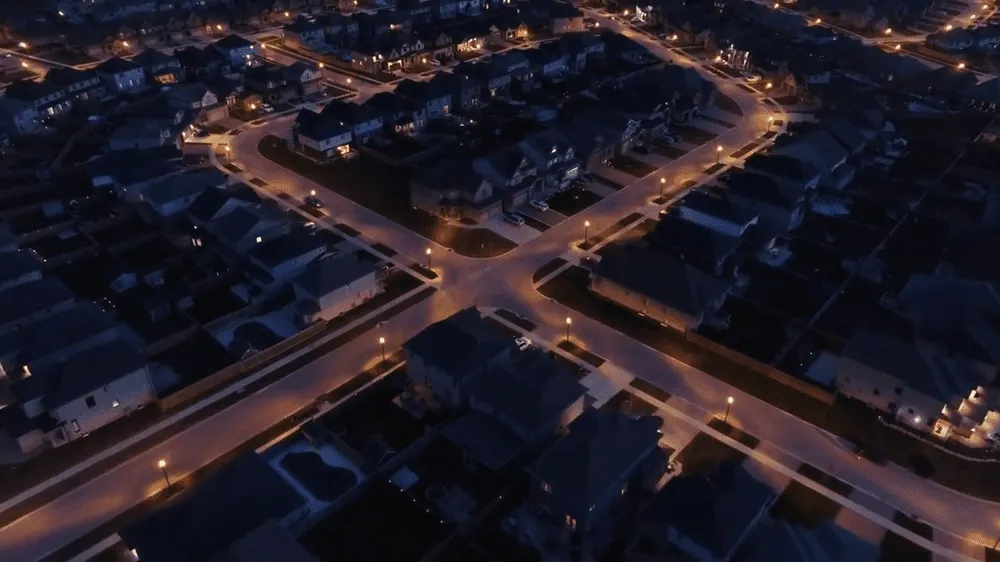
What Will Happen If Your Neighbors Solar Light Shines Into Your Bedroom
- The solar motion lights activate every time you walk by them, which is a frequent point of concern. Your neighbors may not even know that your lights are triggered when you walk through their yards.
- Solutions:
- 1. It is recommended that neighbors adjust the sensing direction of solar motion lights to point to their own yards.
- 2. Explain the trouble caused by false triggering of motion lights to others
- 3. It is recommended to adjust the sensor sensitivity to reduce false triggering
- 4. Negotiate solutions together to maintain neighborhood harmony.
- The light from solar spotlights directed onto a neighbor's landscaping often shines directly into an adjacent window. Light that looks like accent lighting from inside the house looks like floodlights to neighbors.
- Solutions:
- 1. Install a sunshade on the solar spotlight to control the direction of the light
- 2. Adjust the angle of the lamp to avoid shining directly into neighbor windows
- 3. Choose lamps with beam control to reduce light pollution
- 4. Regularly check the lighting effect to ensure that it does not affect neighbors.
- Most jurisdictions do not have a legal framework to address the issue of solar trespass. It is legal to install these lights, but the light pollution they produce falls into a regulatory void.
- Solutions:
- 1. Solve the problem of solar light intrusion through community consultation
- 2. Organize neighborhood meetings to discuss lighting regulations
- 3. Develop community lighting guidelines to reduce light pollution
- 4. Seek assistance from the property management or neighborhood committee to solve the problem.
- Talking to your neighbors about their solar lights is awkward, but necessary. Most people don’t realize these lights are destructive – they install them thinking they’ll help.
- Solutions:
- 1. Communicate with neighbors about solar light issues in a constructive manner
- 2. Express understanding and respect and avoid conflict
- 3. Propose reasonable solutions and negotiate together
- 4. Maintain good neighborly relations and jointly create a harmonious community.
- Solar lights on shared fences spark ongoing controversy. A light that looks beautiful from the installer's side is an ongoing light pollution problem to the neighbor on the other side.
- Solutions:
- 1. Do not install solar lights on shared fences to avoid neighbor disputes
- 2. Choose other locations to install lights to ensure they do not affect neighbors
- 3. Consult with neighbors to jointly decide on the lighting scheme for the fenced area
- 4. Choose products with low brightness and directional lighting to reduce light pollution.
- Motion-driven solar lights are especially disruptive for adjacent bedrooms. A sudden start-up in the middle of the night is more noticeable than constant dimming of the lights.
- Solutions:
- 1. Suggest neighbors to turn off the sensor function of solar motion lights or lower the sensitivity.
- 2. Explain the interference to neighboring bedrooms caused by the sudden activation of motion lights at night.
- 3. It is recommended to use timers to control lighting to reduce disturbance at night
- 4. Negotiate solutions together to maintain neighborhood harmony.
- As solar lighting becomes more common in a community, the cumulative effect can create background light that affects all neighbors. Personal conversations will not solve systemic problems.
- Solutions:
- 1. Promote communities to formulate lighting regulations to reduce cumulative light pollution from solar lamps
- 2. Promote the use of lighting products that comply with dark sky standards
- 3. Organize community meetings to discuss lighting issues
- 4. Seek support from property management or neighborhood committees to promote the implementation of regulations.
- Solar lights with poor beam control can scatter light in all directions. At 2 a.m., LEDs that are supposed to illuminate the road also light up a neighbor's second-story window.
- Solutions:
- 1. Use solar lights with directional beams to reduce light scattering
- 2. Choose lamps with beam control to ensure that the light is directed to the target area
- 3. Install a hood or baffle to control the direction of light
- 4. Regularly check the lighting effect to ensure that it does not affect neighbors.
- A neighbor’s solar-powered Christmas lights stay on all night, causing year-round light pollution to neighboring properties. The holidays last for several months.
- Solutions:
- 1. Negotiate with neighbors and suggest turning off solar Christmas lights after the holidays
- 2. Describe the impact of light pollution that remains on all night on neighboring properties
- 3. It is recommended to use a timer to control the lighting time
- 4. Negotiate solutions together to maintain neighborhood harmony.
Should you have any questions, please do not hesitate to contact us.